
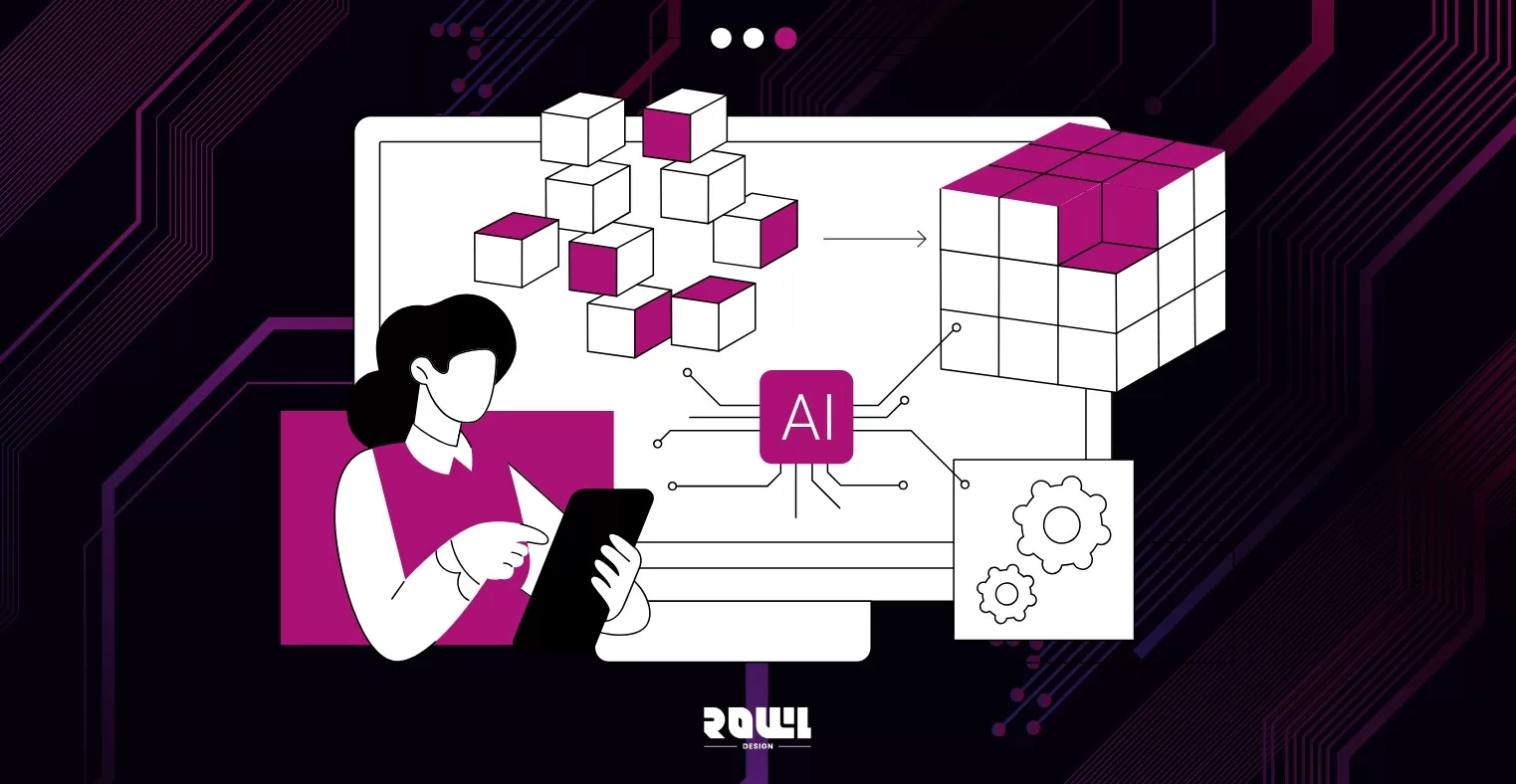
Have you ever imagined having an "all-in-one partner"?
One that not only understands all your design requirements but instantly generates multiple trend-aligned layouts, even predicting user preferences to automatically optimize every button placement?
This is no longer a fantasy.
In today's digital age, artificial intelligence (AI) is evolving from an auxiliary "execution tool" into a core strategic partner driving management innovation and design transformation.
In web design, e-commerce store design, app development, and even complex system integration, AI's involvement is no longer merely about "faster execution." It fundamentally redefines processes, unleashes creativity, and delivers precise business outcomes.
As a leading provider of creative and technical solutions, ROLLLL DESIGN has personally practiced and witnessed: the deep integration of AI and professional design is ushering in an unprecedented era of innovation.
1. How is AI redefining design workflows and management approaches?
Traditional design management workflows—from requirements analysis, visual mockups, iterative revisions, to final development—are often linear and time-consuming. The introduction of AI transforms this process into a dynamic, intelligent, and data-driven collaborative loop.
▶ Management Innovation Points:
Project managers can leverage AI tools for preliminary market and competitor style analysis, instantly generating reports on color and typography trends. This shifts decision-making from "experience-based" to "data-driven." Consequently
, resources can be allocated more precisely to the most promising design directions, significantly boosting management efficiency and project success rates.
▶Elevation of the Designer's Role:
Designers are freed from repetitive tasks (such as testing multiple layout combinations or adapting to various screen sizes), allowing them to focus more energy on core creative strategy, emotional design, and brand storytelling. AI
becomes an extension of the designer's capabilities, not a replacement.
2. In Web Design: From "Static Blueprints" to "Dynamic Blueprints"
AI's application in web design extends far beyond automated template generation.
2.1 Intelligent Layout Generation and Content Adaptation
By analyzing vast datasets of successful designs through deep learning, AI comprehends aesthetic principles and user gaze patterns. When fed brand identity, core content, and business objectives, it generates multiple dynamic layout prototypes adhering to design principles—not static mockups. Crucially
, it automatically recommends optimal content presentation modules tailored to different formats (e.g., long-form blogs, product catalogs).
2.2 Personalized Experiences and Real-Time Optimization
Leveraging Natural Language Processing (NLP), AI parses clients' initial requirement descriptions (even voice recordings) and translates them into specific design element keywords.
After a webpage goes live, AI continuously analyzes user behavior (click heatmaps, scroll depth, dwell time) to automatically conduct A/B testing and fine-tune elements—such as adjusting the color or position of call-to-action buttons—enabling continuous self-optimization of conversion rates.
3. In E-commerce Store Design and Development: Creating Intelligent Marketplaces Tailored to Every Individual
The ultimate goal of an online store is conversion, and AI serves as the intelligent engine driving maximum conversion rates.
3.1 Intelligent Visual Processing and Contextualized Product Display
▶ Computer Vision (CV) technology enables bulk processing of product images: automatically
cropping subjects, standardizing backgrounds, optimizing lighting, and even generating virtual model images for apparel products.
Furthermore, AI dynamically generates an "Outdoor Exploration" themed section on the homepage based on user preferences (e.g., previous browsing of camping gear). It intelligently combines relevant products, content, and atmospheric images to spark purchasing inspiration.
3.2 Predictive Recommendations and Dynamic Path Planning
Traditional recommendations rely on "past" purchase history, while AI-driven recommendations predict "future" needs. By
analyzing global user behavior patterns and real-time trends, AI can not only suggest ties after a user searches for "wedding suits," but also intelligently push "wedding shoe styling guides" or relevant brand ads in the following days. This deeply integrates into the user's decision journey, acting as a personal shopping advisor.
4. In App Design and Development: User Experience Evolving from "Guessing" to "Understanding"
Apps feature higher interaction complexity, and AI enables experience design to truly achieve "user-centricity."
4.1 Intelligent Interaction Prototyping and Usability Early Warning
During the design phase, AI tools can simulate interactions between different user groups (e.g., younger users, older users) and prototype interfaces, predicting potential points of confusion or operational barriers to issue usability warnings in advance. This
makes design validation more scientific and reduces rework in later development stages.
4.2 Adaptive Interfaces and Accessibility Design
AI can identify user contexts in real time—for example, automatically enlarging buttons and simplifying workflows when detecting a user is walking, or
instantly enhancing contrast for visually impaired users. This context-aware adaptability makes apps truly intelligent and inclusive.
5. In System Integration: The Nervous System Hub Evolving from "Connectivity" to "Intelligent Flow"
The key to complex system integration lies in the seamless coordination of data flows and business processes. AI serves as the "nerve center" ensuring its efficient and robust operation.
5.1 Intelligent API Management and Anomaly Alerting
When integrating multiple applications and data sources, AI monitors the data exchange status across all API interfaces, using machine learning to recognize normal traffic patterns.
Upon detecting abnormal delays or surges in error rates, the system issues early warnings and automatically activates backup plans to safeguard business continuity.
5.2 Intelligent Data Asset Organization and Value Extraction
AI automatically classifies and tags disorganized data integrated into the system, creating clear data maps that enable non-technical personnel to quickly understand data relationships. Furthermore
, it can automatically generate critical business insight reports based on management needs, transforming dormant data into decision-driving assets.
6. Action Roadmap: Embracing the AI-Driven Design and Management Revolution
▶ Mindset Shift: View
AI as a "strategic design partner" rather than merely an efficiency tool. Management must consider how AI can help teams solve their most critical business challenges.
▶ Scenario Approach: Start
with a specific, high-value pain point (e.g., "boosting online store product click-through rates" or "reducing app onboarding time") to implement AI solutions and rapidly validate value.
▶ Human-AI Collaboration:
Establish new workflows integrating designers, developers, and AI tools. Train teams in skills like "prompt engineering" for efficient AI collaboration.
▶ Data Foundation:
Ensure high-quality, structured data to "feed" AI systems—the cornerstone of all intelligent applications.
▶Iteration and Growth:
Adopt agile methodologies to continuously optimize products and designs using AI insights, forming an intelligent closed-loop of "design-deploy-learn-optimize."
7. More Than Efficiency Gains: A Fundamental Leap in Innovation Capability and Service Value
By deeply integrating
AI into web design
, e-commerce store design
, app development
, and system integration, ROLLLL DESIGN
achieves not merely efficiency gains, but a fundamental leap in innovation capabilities and service value.
We remain at the forefront where technology and creativity converge
.
If you seek to transform AI's strategic potential into tangible market advantages and desire a truly intelligent, efficient, and compelling digital product,
ROLLLL DESIGN's expert team stands ready as your most reliable partner.
Let us join hands to define the future of intelligent design.
The best designs of tomorrow will emerge from the perfect synergy between human creativity and machine intelligence.
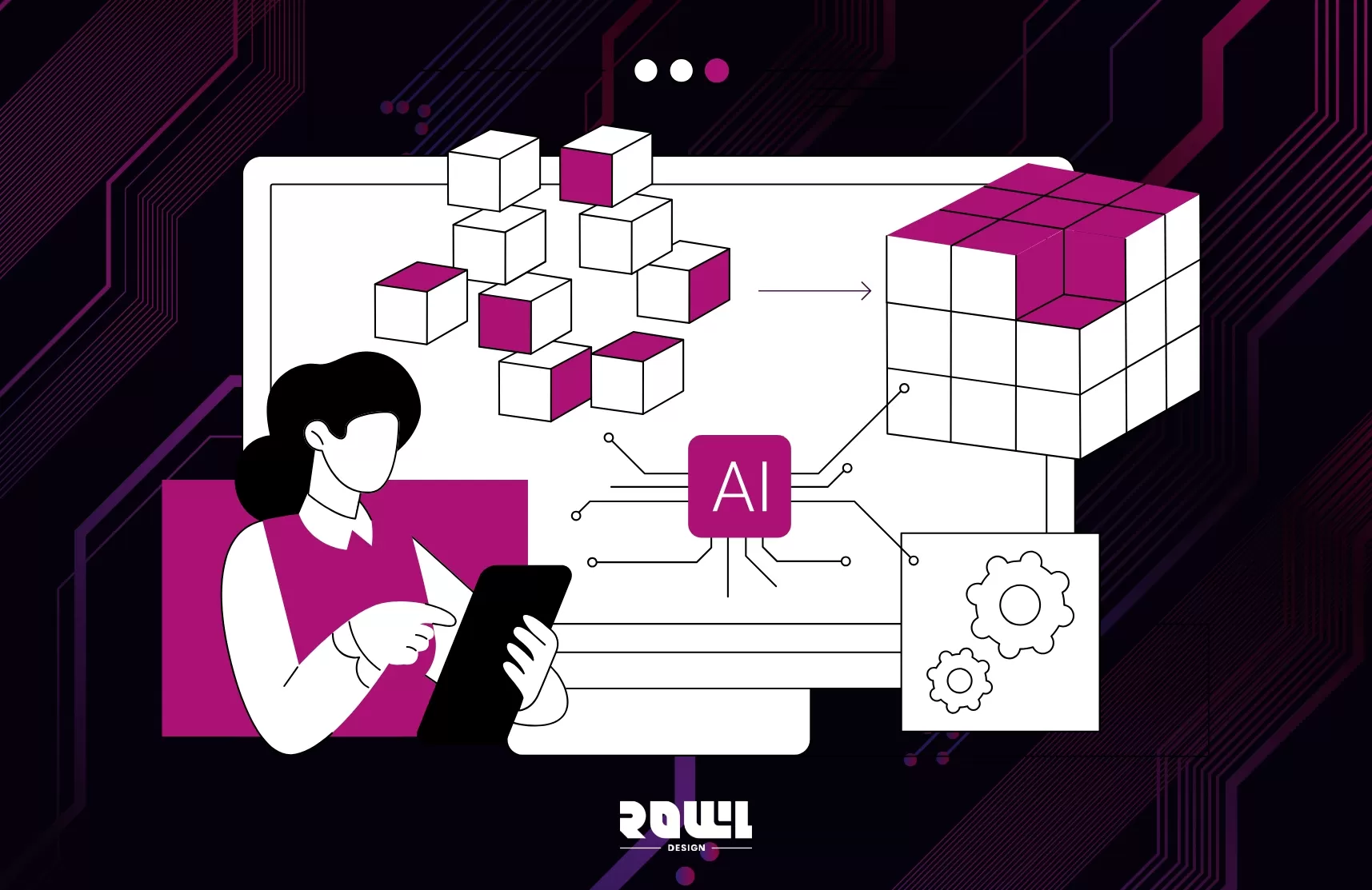
The Evolution of AI in Management & Web Design: From Mere Tool to Integrated Partner
Have you ever imagined having an "all-in-one partner"? One that not only understands all your design requirements but also instantly generates multiple trend-aligned layouts, even predicting user preferences to automatically optimize every button's placement? This is no longer a fantasy....
AI Artificial Intelligence , App Development
How is AI Transforming Everything? The App Revolution Sweeping from Hospitals to Warehouses
How AI Is Reshaping Eight Major Industries: The App Intelligence Revolution from Healthcare to Logistics When you think of AI, do you only picture chatbots or video recommendations? In reality, artificial intelligence has already penetrated the core of every industry, fundamentally reshaping product logic and user experience from the ground up....
AI Artificial Intelligence , App Development
AI as the Engagement Engine: Revolutionizing User Experience in Apps
Do you also feel like getting users to open your app every day is like a grueling rally race? Push notifications get ignored, new features launch without a ripple, and users come and go like the wind. The problem might not be that your app is bad—it's that it doesn't "understand" your users well enough....
APP Development , AI Artificial IntelligenceHelp you solve company IT transformation challenges,
All types of functional websites/Apps/systems can be created!
If you have any production needs, please contact us,
We will provide free consultation for your needs.
- # Good service ≠ More expensive
- # Professional IT team, improve website effectiveness
- # Proper planning, tailor-made IT solutions
Popular Articles
From Idea to App Store: Your 2026 App Development Roadmap
15621
The 2026 Hong Kong Digital Marketing Playbook: Your Guide to Outpacing the Competition
8511
Beyond WordPress: Understanding What Truly Defines an Enterprise CMS
6965
A Beginner's Guide to System Development: An Overview of the 7 Key Processes, Common Development Models, and Cost Components
4908
Don't let an outdated website make your company seem old-fashioned to customers
4572