
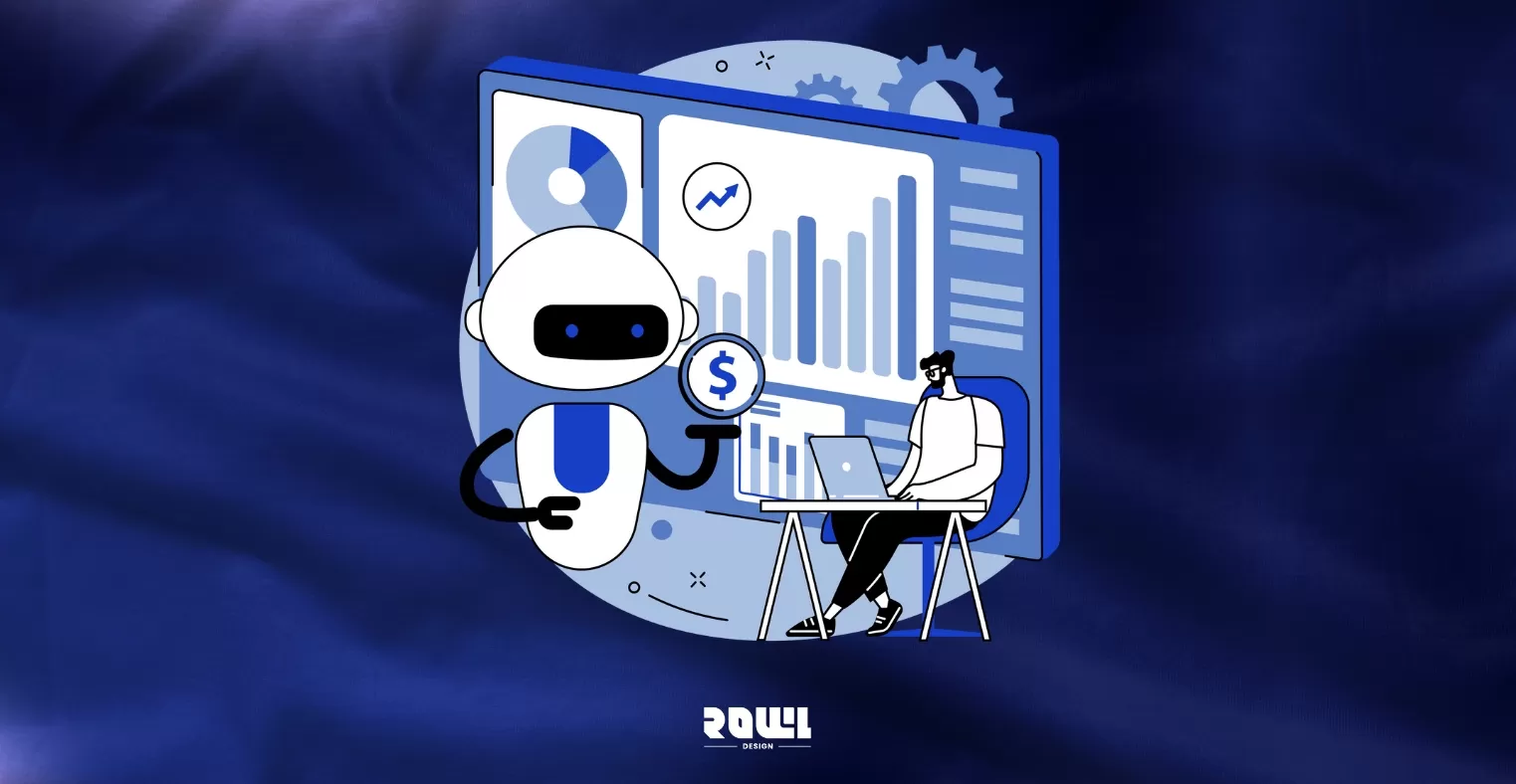
Do you also feel like getting users to open your app every day is like a grueling rally race?
Push notifications get ignored, new features launch without a ripple—users come and go like the wind.
The problem might not be that your app is bad, but that it doesn't "understand" your users well enough.
Now, an AI-driven experience revolution is underway—transforming apps from passive tools into proactive, thoughtful, and even predictive smart companions.
This article combines real-world examples and data to reveal how AI technology can systematically transform your app from being merely used to being remembered, relied upon, and deeply loved by users.
1. From "One Size Fits All" to "One Size Fits You": Data-Driven Deep Personalization
Imagine two stores: one greets every customer with the same welcome and recommends identical products; the other remembers your preferences, greeting you upon entry with, "We just received new books in your favorite genre and reserved a window seat for you." Which would you prefer?
The latter offers precisely what Google's 2026 AI Intelligence Trends Report calls "concierge-style" personalized experiences, with AI serving as the super-butler behind the scenes.
1.1 How Does AI Achieve This? Contextual Intelligence Beyond Recommendations
Through machine learning, AI silently analyzes each user's "digital footprint": pages browsed, dwell time, purchase history, interaction patterns, and even geographic location. But the future goes beyond this—it can proactively anticipate needs.
For example, a fitness app's AI could analyze a user's workout performance, sleep data, and calendar to push high-intensity training during energetic mornings and recommend restorative yoga during tired evenings—achieving context-aware intelligent interaction.
1.2 Empirical Data and Commercial Value
The commercial value of this deep personalization is exceptionally significant. Take Netflix as an example: its AI-driven recommendation system is credited with driving over 30% of the platform's user viewing growth.
In retail, deep personalization ranks among the top generative AI investments in terms of ROI. Google reports that 49% of smart device application enterprises have already deployed it for customer service and experience optimization.
This signifies that personalization is no longer a nice-to-have feature, but a core competitive advantage directly impacting retention and revenue.
2. From "Self-Service" to "Intelligent Co-worker": AI-Enhanced Real-Time Interaction
When users encounter issues, traditional FAQ pages or lengthy customer service waits create critical friction points in the experience.
AI chatbots are rewriting the rules, evolving from passive response tools into intelligent entities capable of proactive observation, decision-making, and execution. 2.1 From Response to Prediction: The Closed-Loop Action of Intelligent Entities
2.1 From Response to Prediction: The Closed-Loop Actions of Intelligent Entities
Next-generation AI interactions leverage natural language processing (NLP) to not only understand context but also orchestrate multi-step proactive services.
For example, in an e-commerce app, when a logistics AI entity detects a package delay due to weather, it can automatically execute three steps: confirm the reason, reschedule delivery, generate a compensation coupon, and proactively notify the user.
This transforms a potential customer complaint into a pivotal moment for building trust.
2.2 Measuring Effectiveness: Key Metrics and Data
After deploying AI interaction features, their effectiveness must be measured with data. A well-performing AI customer service system can achieve a self-service resolution rate (the percentage of issues resolved without human intervention) of approximately 65%.
Other key metrics include:
▶ User satisfaction: Collected via post-interaction ratings.
▶ Average Response Time: Aim for "second-level" response times.
▶ Repeat Usage Rate: Whether users are willing to use the feature again serves as the gold standard for evaluating its value.
3. From "Completing Tasks" to "Enjoying the Journey": AI-Driven Dynamic Gamification Design
The core of gaming's addictive appeal lies in instant feedback and appropriately challenging tasks. AI can evolve this mechanism from static point-and-badge systems into an intelligent engine that customizes challenges in real-time for each user.
3.1 Creating "Flow" Experiences: Adaptive Challenges and Rewards
AI analyzes user capabilities, past achievements, and engagement patterns to dynamically adjust gamified content. For newcomers, simple goals like "log in three times this week" deliver quick accomplishments;
For seasoned users, design advanced missions with rare virtual items as rewards. This dynamic balance of difficulty and reward keeps users perpetually in the optimal engagement state— "challenging yet achievable with effort"—known in psychology as the "flow" channel.
3.2 Personalized Growth Narratives
Furthermore, AI can weave unique "storylines" for users' growth journeys. In learning apps, AI generates customized learning paths and levels based on users' goals and progress, transforming the advancement process into a personal adventure.
Microsoft Research suggests that future AI could even dynamically generate interactive narrative content based on users' real-time choices and emotions.
4. From "Post-Analysis" to "Continuous Evolution": Optimizing User Experience Itself with AI
AI serves not only as a creator of front-end interactions but also as a driver of back-end product evolution. By continuously analyzing vast amounts of user behavior data, AI helps teams pinpoint experience gaps with precision, enabling self-optimization and predictive maintenance of products.
4.1 Insight Discovery and Predictive Optimization
Through user behavior analysis and tracking point monitoring, AI acts like a diagnostic physician, pinpointing the "breakpoints" causing churn. For example, if it detects high abandonment rates at a specific step in the payment process, AI can flag potential design confusion or slow loading on that page.
More advanced predictive analytics enable systems to proactively trigger assistance messages before users become confused or are about to churn.
4.2 Intelligent A/B Testing and Data Foundations
AI can manage and analyze large-scale A/B tests, rapidly assess how different designs impact core metrics (such as conversion rates and retention rates), and automatically scale the optimal version, significantly accelerating the iteration cycle. The foundation for all this is high-quality data.
Industry reports indicate that 52% of generative AI adopters have deployed AI agents into production. Just as Walmart successfully reduced inventory backlog by 20% through AI-driven multidimensional data analysis, investing in data is fundamental to ensuring AI models are accurate and effective.
5. Action Roadmap: Integrating AI into Your App Strategy
▶ Establish a Data Foundation: First, consolidate in-app user data sources to ensure comprehensive, high-quality behavioral data capture. This fuels all AI applications.
▶ Prioritize Clear Scenarios: Avoid trying to do everything at once. Start with scenarios where user pain points are most evident and data is most abundant (e.g., personalized homepages, customer service funnels). Achieve one, see results one.
▶ Adopt "Intelligent Entity" Thinking: During design, consider whether AI can evolve from a simple response tool into an "intelligent entity" capable of linking multi-step processes and proactively delivering closed-loop services.
▶ Establish a measurement system: Set clear business objectives and measurable KPIs (e.g., self-service resolution rate, user satisfaction) for each AI feature, and monitor them continuously.
▶ Embrace human-AI collaboration: AI's purpose is to free up human resources. Let AI handle repetitive tasks and data analysis, enabling your team to focus on strategic planning, creative design, and managing the most complex emotional interactions.
For apps, AI has evolved from a flashy gimmick into core infrastructure for building deep user relationships.
Microsoft Research indicates that by 2026, the way AI interacts with humans will undergo a fundamental shift—transforming from a task-executing tool into a trusted partner capable of collaboration, reasoning, and mutual growth.
6. Future Winners
In this fiercely competitive market where mobile AI applications have reached 645 million users, leveraging AI to create deeply personalized, proactive, intelligent, and engaging experiences has become essential for survival and growth.
Future winners will be those who elevate AI from a "functional module" to the "soul of the product."
At ROLLLLLL DESIGN, our app development services deeply integrate forward-thinking AI application strategies.
We focus not only on technical implementation but also on how these technologies serve your business objectives—substantially boosting user loyalty and lifetime value.
If you're planning a new app or seeking to infuse existing applications with fresh intelligent vitality, we invite you to engage with ROLLLL DESIGN's expert team.
Together, let's use AI to create the next "Wow Moment" for your users, forging emotional connections that transcend mere functional dependency.
The Evolution of AI in Management & Web Design: From Mere Tool to Integrated Partner
Have you ever imagined having an "all-in-one partner"? One that not only understands all your design requirements but also instantly generates multiple trend-aligned layouts, even predicting user preferences to automatically optimize every button's placement? This is no longer a fantasy....
AI Artificial Intelligence , App Development
How is AI Transforming Everything? The App Revolution Sweeping from Hospitals to Warehouses
How AI Is Reshaping Eight Major Industries: The App Intelligence Revolution from Healthcare to Logistics When you think of AI, do you only picture chatbots or video recommendations? In reality, artificial intelligence has already penetrated the core of every industry, fundamentally reshaping product logic and user experience from the ground up....
AI Artificial Intelligence , App Development
AI as the Engagement Engine: Revolutionizing User Experience in Apps
Do you also feel like getting users to open your app every day is like a grueling rally race? Push notifications get ignored, new features launch without a ripple, and users come and go like the wind. The problem might not be that your app is bad—it's that it doesn't "understand" your users well enough....
APP Development , AI Artificial IntelligenceHelp you solve company IT transformation challenges,
All types of functional websites/Apps/systems can be created!
If you have any production needs, please contact us,
We will provide free consultation for your needs.
- # Good service ≠ More expensive
- # Professional IT team, improve website effectiveness
- # Proper planning, tailor-made IT solutions
Popular Articles

From Idea to App Store: Your 2026 App Development Roadmap
15621
The 2026 Hong Kong Digital Marketing Playbook: Your Guide to Outpacing the Competition
8511
Beyond WordPress: Understanding What Truly Defines an Enterprise CMS
6964
A Beginner's Guide to System Development: An Overview of the 7 Key Processes, Common Development Models, and Cost Components
4908
Don't let an outdated website make your company seem old-fashioned to customers
4572