

When users type “web design company” or “website design” into a search engine, what they’re really looking for is often more than just an aesthetically pleasing online presence—it’s a digital business asset that can automatically attract potential customers and boost sales around the clock.In the digital marketing landscape of 2026, an excellent web design must seamlessly integrate user experience (UX), search engine optimization (SEO), and conversion rate optimization (CRO).
This article combines the latest 2026 Google algorithm data with real-world case studies from ROLLLL DESIGN to break down for Hong Kong businesses how to build a commercial website with strong SEO competitiveness and high conversion rates, while providing concrete, actionable steps.
Why is “website design” in 2026 no longer just about “making it look pretty”?
As Google further strengthens its scrutiny of “Search Generated Experience” (SGE) and “Core Web Vitals” in 2026, traditional websites that prioritize visual appeal alone can no longer survive in this fiercely competitive landscape.
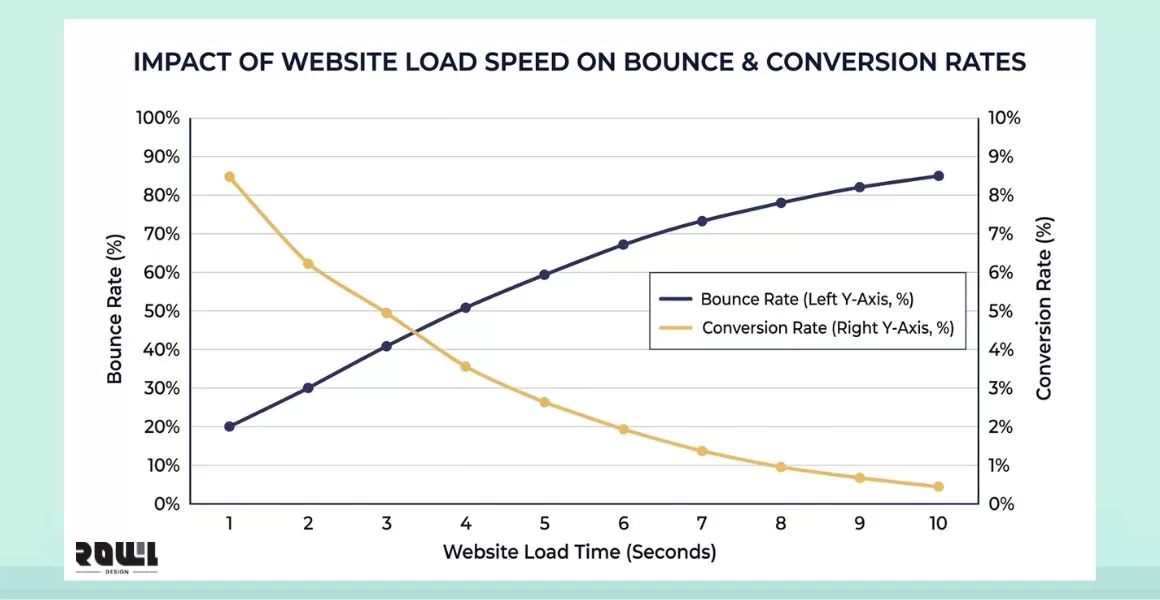
According to the latest 2026 market research data, over 78% of Hong Kong consumers will immediately bounce and switch to a competitor’s site if they encounter a website with a load time exceeding 3 seconds or disorganized mobile layout. This means that web design has evolved from a purely visual art form into a comprehensive discipline that integrates data analysis, front-end code optimization, and consumer psychology.If your website cannot be effectively crawled by Google or fails to guide users toward the next action, it remains nothing more than a neglected “digital island”—no matter how exquisite its design.
The 4 Core Elements of High-Conversion Website Design
1. SEO-Friendly Architecture
A website’s SEO foundation is determined during the design phase.Excellent website design must feature a clear site hierarchy, a flat directory structure, and semantic HTML tags. This not only helps Google’s crawlers understand your content more quickly but also allows users to find the information they need with the fewest possible clicks. For businesses with complex service portfolios (such as companies offering web design, e-commerce design, app development, and system development), a solid information architecture is crucial for ranking.
2. Data-Driven Website Layout Design
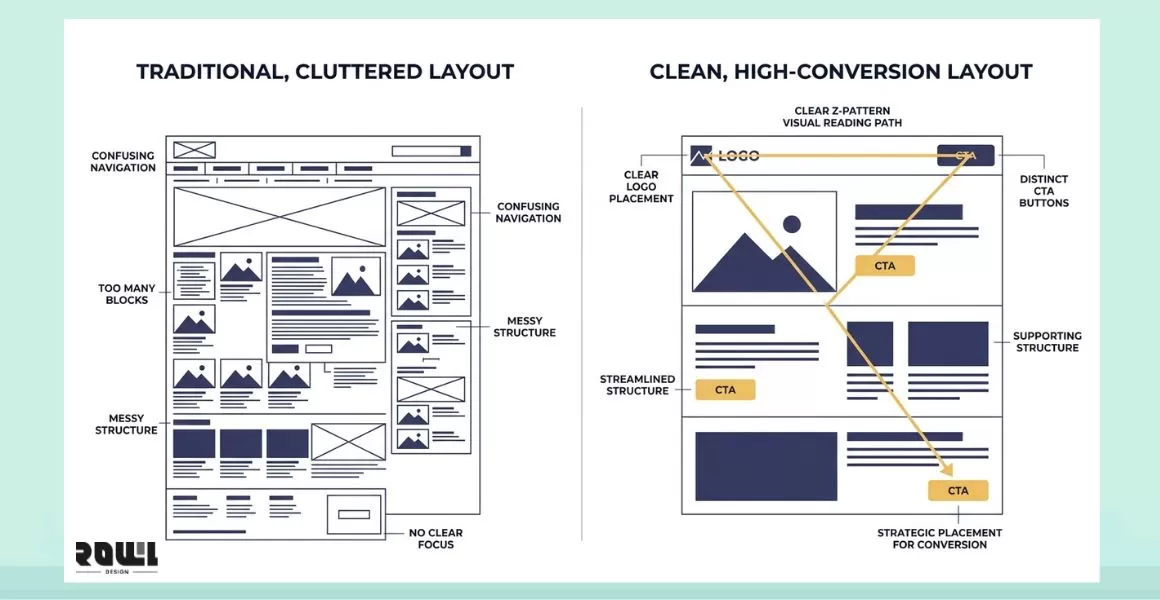
High-conversion website layouts aren’t created out of thin air; they’re based on eye-tracking technology and heatmap analysis. Designers need to place core value propositions and call-to-action (CTA) buttons along the “F-shaped” or “Z-shaped” reading paths where users’ eyes linger the longest. We recommend studying top website design examples across various industries to identify layout strategies that align with your brand’s tone and style.
3. The Ultimate Mobile-First Experience
By 2026, over 85% of web traffic in Hong Kong will come from smartphones. Therefore, modern website development must adopt a “mobile-first” design philosophy. This goes beyond responsive design to include optimizing button sizes for touch interactions, streamlining mobile menus, and optimizing how images and videos load.
4. System-Level Security and Loading Speed
This is often an aspect overlooked by general graphic designers. A website’s loading speed directly impacts SEO rankings. Professional web design agencies utilize system-level technologies such as edge computing, advanced image formats (WebP/AVIF), and code compression to ensure pages load instantly across all network environments. Additionally, robust SSL certificates and DDoS attack prevention infrastructure are the cornerstones of building customer trust.
Want to build a high-conversion website? Contact
ROLLLL DESIGN today! Get a consultation now
Practical Comparison: Traditional Web Design vs. High-Conversion Web Design
Evaluation Criteria | Traditional Web Design (Outdated Approach) | 2026 High-Conversion Web Design (ROLLLL DESIGN Standard) |
Design Focus | Visual-driven, focused on corporate self-promotion | User intent-driven, focused on solving pain points and driving conversions |
SEO Considerations | Meta tags are filled in only after launch | Comprehensive integration of SEO from site architecture planning and semantic coding to page load speed |
Website Layout | Information overload with no clear navigation path | Strategic use of white space, precise placement of CTAs (Call-to-Actions), and conversion funnel |
User Experience | Limited to simple scaling, making it difficult to tap | Mobile-first design with dedicated gestures and streamlined menus |
Technical Performance | Template-based, redundant code, slow loading | Lightweight code, using the latest image formats and caching technologies to achieve instant loading |
Data Tracking | Lack of tracking, unable to evaluate performance | Integrated advanced analytics tools for precise tracking of every click and conversion path |
Analysis of Successful Hong Kong Corporate Website Design Cases (2026 Data)
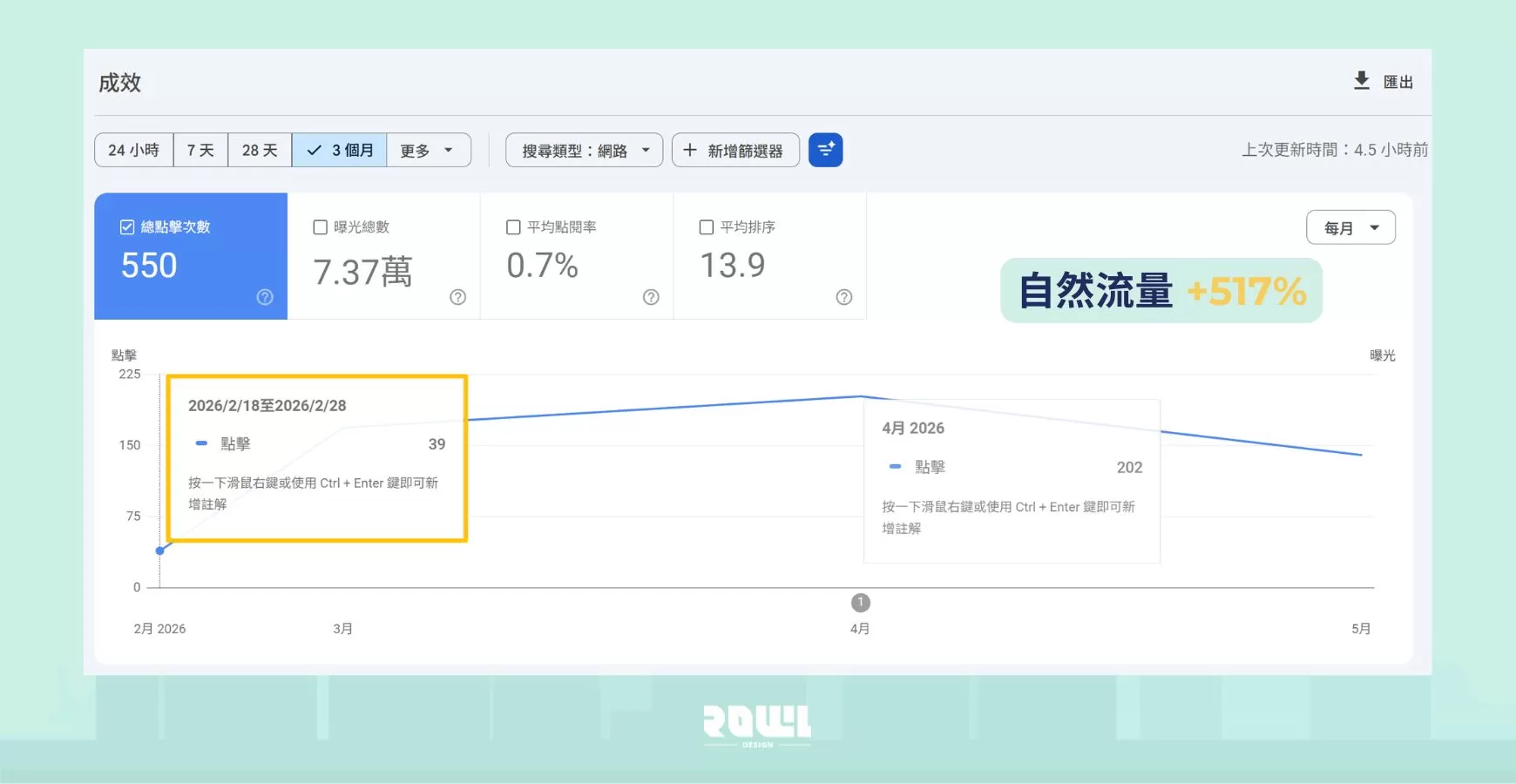
Let’s take a local mid-sized B2B consulting firm recently served by ROLLLL DESIGN as an example. The company’s original website design was outdated, lacked mobile optimization, received less than 100 organic visits per month, and generated almost no inquiries from the site.
After we took over and redesigned the website:
1. Restructured the information architecture: We reorganized the navigation menu based on their core business and created dedicated service pages based on keyword research results, ensuring each page precisely matches specific search intent.
2. Optimized page layout: We incorporated trust signals, such as client testimonials and partner logos, and added a “Book a Free Consultation” CTA in the prime location on each service page.
3. Technical SEO upgrades: We optimized image sizes and enabled lazy loading, reducing the site’s LCP (Largest Contentful Paint) from 4.5 seconds to 1.2 seconds.
Results: Three months after the new website launched, not only did its core keywords (such as specific consulting services) successfully rank on Google’s first page, but organic traffic increased by 517%, and monthly qualified leads tripled. This clearly demonstrates that web design that balances SEO and UX can deliver tangible business returns for companies.
A 5-Step Practical Roadmap to Building a Successful Website
Whether you’re building a brand-new website or revamping an existing platform, you can follow this standard process summarized by ROLLLL DESIGN:
1. Business Objectives and Audience Analysis: Clearly define the website’s ultimate goal (e.g., lead generation, online sales, brand exposure). Gain a deep understanding of your target audience’s pain points and search habits.
2. Keyword Research and Sitemap Planning: Before beginning the design process, identify high-value keywords and use them to build a logically structured website architecture.
3. Wireframing and Prototyping: Focus on the website’s layout and user experience flow, and establish the information hierarchy. At this stage, there is no need to pay excessive attention to colors and images.
4. UI Visual Design and Content Integration: Incorporate brand visual elements while naturally integrating high-quality copy that incorporates keywords into the design.
5. Front-End Development and Technical SEO Testing: Ensure the website complies with W3C standards and undergo rigorous testing across different devices and browsers. Before launch, be sure to conduct a comprehensive audit using tools such as Google PageSpeed Insights.
Key Criteria for Selecting the Right Web Design Company
Evaluation Criteria | Unqualified Web Design Companies | Professional Full-Service IT Companies (e.g., ROLLLL DESIGN) |
Business Understanding | Only asks about preferred colors and reference websites | In-depth understanding of the client’s business model, target audience, and revenue streams |
Technical breadth | Can only use off-the-shelf templates; unable to customize features | Possesses system development and app development capabilities, capable of handling complex front-end and back-end integration |
SEO Awareness | Treats SEO as a post-launch marketing service subject to additional fees | Integrates technical SEO into every stage of website development |
Post-Sales and Maintenance | Disappears after the website goes live, making modifications difficult | Provide ongoing technical support, security updates, and data optimization recommendations |
Conclusion: Investing in high-quality web design is an investment in your company’s future
In 2026, an excellent website is no longer an optional extra for businesses—it is a core competitive advantage. Whether building a corporate website, designing an online store, or even expanding into app development, a robustly structured and well-designed website is the cornerstone of all digital marketing strategies.
If you’re looking to elevate your company’s online presence and attract more organic traffic, ROLLLL DESIGN—as one of Hong Kong’s leading custom IT service providers—brings extensive cross-industry experience to the table. We not only excel at creating outstanding website layouts but also specialize in leveraging underlying technologies to build a “lead-generation machine” for you.
Ready to upgrade your business website?
Contact us to learn more about our tailor-made web design solutions! Inquire now
High Traffic but Zero Orders? 5 Critical Mistakes in "Website Page Design" That Are Causing You to Lose Customers
Is your website getting daily traffic, but no one is requesting quotes or placing orders? The latest conversion rate analysis for 2026 will help you identify 5 critical flaws in your “website design” that are causing you to lose customers. Improve your layout right away and turn that traffic into revenue! ...
Website Page Design , Website Traffic
What Pitfalls Are Hidden in “Web Design Packages”? 4 Real Metrics for Evaluating Hong Kong Web Design Companies
Are “Web Design Packages” Priced at a Few Thousand Yuan Really a Good Deal? We expose common hidden fees and template traps in 2026. We’ll teach you 4 key metrics to properly evaluate Hong Kong web design companies and avoid the hassle of having to redo your website!...
Website Design Packages , Website Design Prices
2026 Corporate Website Redesign Guide: What’s the Difference Between a Custom-Designed Website and a Traditional Template-Based Website?
Does your business need a website redesign? This article breaks down the latest web design standards for 2026 and provides a practical roadmap. Learn why partnering with a professional web design agency that offers custom system development can help you move beyond cookie-cutter website packages and build a high-conversion digital asset....
Website Redesign , Website Redesign , Web DesignHelp you solve company IT transformation challenges,
All types of functional websites/Apps/systems can be created!
If you have any production needs, please contact us,
We will provide free consultation for your needs.
- # Good service ≠ More expensive
- # Professional IT team, improve website effectiveness
- # Proper planning, tailor-made IT solutions
Popular Articles

From Idea to App Store: Your 2026 App Development Roadmap
16098
The 2026 Hong Kong Digital Marketing Playbook: Your Guide to Outpacing the Competition
8772
Beyond WordPress: Understanding What Truly Defines an Enterprise CMS
7077
A Beginner's Guide to System Development: An Overview of the 7 Key Processes, Common Development Models, and Cost Components
5468
Don't let an outdated website make your company seem old-fashioned to customers
4725